Bereken hoeveel u bespaart
Aantal geproduceerde dozen
1600000000
CO₂ Saved (lbs)
90000000
Aantal geredde bomen
4518639.77

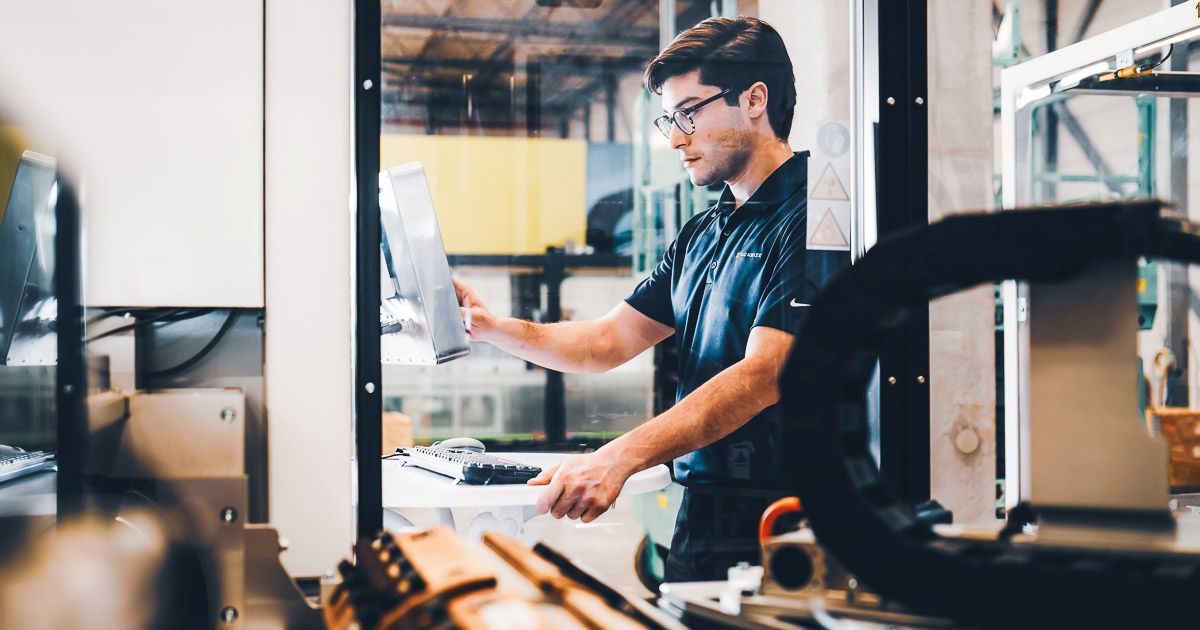

The best packaging workflows don’t call attention to themselves. Boxes are available when they’re needed, products keep moving, and employees aren’t constantly making packaging decisions or working around the process.
When packaging creates delays, decisions, extra movement, or workarounds, those small points of friction compound across the entire operation. A few extra seconds at the packing station can become hours across thousands of orders. A missing box can hold up every order behind it. And a workflow that requires constant intervention makes it harder to keep orders moving.
The goal isn't more automation for its own sake. It's a simple, predictable workflow built around the way your operation actually works. When packaging goes well, it's so seamless your team barely notices it.
A well-designed packaging workflow limits decision-making and keeps products moving. This means:
The goal is not to eliminate people from the process altogether. It’s to eliminate work that doesn’t need their attention so they can focus their efforts where they add the most value.
Before choosing a packaging solution, understand the workflow it needs to support.
Look at how products, people, packaging, and data move through the facility - and where that movement breaks down. Where are teams waiting or making repetitive decisions? Which touches can be eliminated? What bottlenecks are slowing the operation down?
Then consider how packaging fits into the broader fulfillment process. The solution may need to connect with picking workflows, conveyors, warehouse management systems, shipping systems, and existing automation. Understanding those requirements helps you choose the right solution and the right partner.
Choose automation around the workflow - not the workflow around the machine. Streamlining packaging shouldn't require starting over. The right solution works within the operation while creating a path for it to improve.
Manual packaging creates friction when employees must make repeated decisions or compensate for packaging that doesn’t fit the products moving through the operation.
Right-sized packaging automation simplifies that process by making the packaging process consistent, predictable, and better aligned to the product.
Rather than digging through a large selection of stock boxes or adjusting oversized packaging to fit individual orders, right-sized automated packaging solutions produce the right box for each order as it comes in. This reduces unnecessary handling and decision-making.
It also allows for better space utilization in the warehouse. When boxes are produced on demand, there is no need to dedicate large amounts of space to stock box storage.
All of this leads to a packaging process that supports fulfillment instead of interrupting it.
Packaging shouldn’t be separated from the rest of your fulfillment workflow. It’s most effective when it is part of a complete system.
Packaging can interact with and be affected by everything around it, including:
The machine is only one part of the workflow. The information that determines what package to make, when to make it, and where it needs to go can be just as important as the equipment producing it. When systems share that information, products move more directly and fewer manual decisions are required.
For example, cartonization software can determine the right-sized package for each order, while packaging automation produces it when and where it is needed. The more effectively those steps connect, the less work operators have to do to bridge the gaps between them.
Well-designed packaging workflows should evolve as order profiles, product mixes, and volumes change. Look for opportunities to combine steps and remove new points of friction over time.
The same principle applies to system service and maintenance. Coordinating service tasks can reduce planned downtime, while performance data and reporting can reveal pain points and help teams make informed improvements.
But data is only part of the equation. Remember that the people who interact with the workflow every day are one of your greatest resources. The customer isn’t the only person receiving the package – it's also the packers, machine operators, maintenance team, and service technicians.
Talk to those internal customers regularly to understand where the process slows down, what requires more attention than it should, and where workarounds have become routine. Their experiences can reveal problems that performance metrics alone may not show.
Your packaging workflow may be creating more work than it needs to if:
These may seem like small issues individually, but across a high-volume fulfillment operation, they can lead to huge bottlenecks, lost time, and unnecessary labor.
Automation is only valuable when it makes the lives of people using it easier.
The best packaging workflow keeps orders moving without requiring constant attention. It gives workers the tools and packaging they need, connects with the systems around it, and minimizes the need for manual intervention.
When packaging works, employees can focus on fulfillment – not boxes. Good packaging automation shouldn’t feel like another system to manage, but a natural part of the operation.
At Packsize, we look at the entire packaging workflow when considering automation. We work with businesses to understand how products, people, systems, and packaging interact, then design automation around the operation – not the other way around.
Want to learn how you can partner with Packsize to create a packaging workflow your team barely notices? Schedule an evaluation with one of our experts today.